Newton · Greater Boston
JC Mobility Equipment in Newton, MA
JC Mobility Equipment installs stairlifts, wheelchair ramps, platform lifts, ceiling track lifts, and home accessibility modifications throughout Newton and Greater Boston. Factory-trained technicians handle the assessment, the installation, and the service that follows.
- 20+ years of proven experience
- Certified, factory-trained technicians
- ADA-compliant assessments
Newton, MA More than mobility. It's peace of mind.
20+ years of experience
Two decades of hands-on installation experience
100% customer satisfaction
Thousands of installations completed
Factory-trained technicians
Manufacturer-compliant installation
24/7 repair line
For qualifying mobility equipment
Mobility equipment services in Newton, MA
JC Mobility Equipment installs and services stairlifts, wheelchair ramps, platform lifts, home elevators, ceiling track lifts, bathroom safety equipment, vehicle mobility equipment, and portable patient lifts across Newton and Greater Boston.
Stairlift Installation
Straight, curved, and outdoor stairlifts installed to manufacturer specifications, with the rail secured to the stair treads.
View Stairlifts →Wheelchair Ramp Installation
Modular, threshold, portable, and permanent ramps measured for slope, landings, handrails, and safe door clearance.
View Wheelchair Ramps →Vertical Platform Lift Installation
Enclosed and unenclosed lifts for porches, decks, split-level entries, garages, and commercial access points.
View Platform Lifts →Home Elevator Installation
Residential elevators planned around cab size, structural support, power, permitting, and landing access.
View Home Elevators →Ceiling Lift Installation
Ceiling track and patient lift systems that reduce caregiver lifting strain between bed, wheelchair, and bathroom.
View Ceiling Lifts →Bathroom Safety Equipment
Grab bars, shower seats, transfer benches, and barrier-free bathroom modifications anchored to structural support.
View Bathroom Safety →Vehicle Mobility Equipment
Vehicle lifts, ramps, hand controls, transfer aids, and scooter carriers fitted to your car or van.
View Vehicle Equipment →Portable & Hoyer Lift Setup
Manual and powered patient lifts assembled, sling-matched, and demonstrated for safe daily transfers.
View Portable & Hoyer Lifts →Mobility equipment installation built for Newton, MA homes
JC Mobility Equipment has proudly served individuals and families with trusted mobility equipment installation for over 20 years, specializing in wheelchair ramps, stair lifts, porch lifts, vehicle lifts, ceiling track lifts, and home accessibility modifications. Our certified technicians install and service mobility solutions including power wheelchairs, scooters, hospital beds, grab bars, and threshold ramps for homes, vehicles, and commercial spaces throughout the region.
With a 100% customer satisfaction rate and thousands of successful installations completed to date, we combine ADA-compliant standards with manufacturer-certified expertise to ensure safety, durability, and independence for every client. From initial consultation to final installation, JC Mobility Equipment is the accessibility partner homeowners, caregivers, and healthcare providers rely on for dependable, code-compliant mobility solutions.
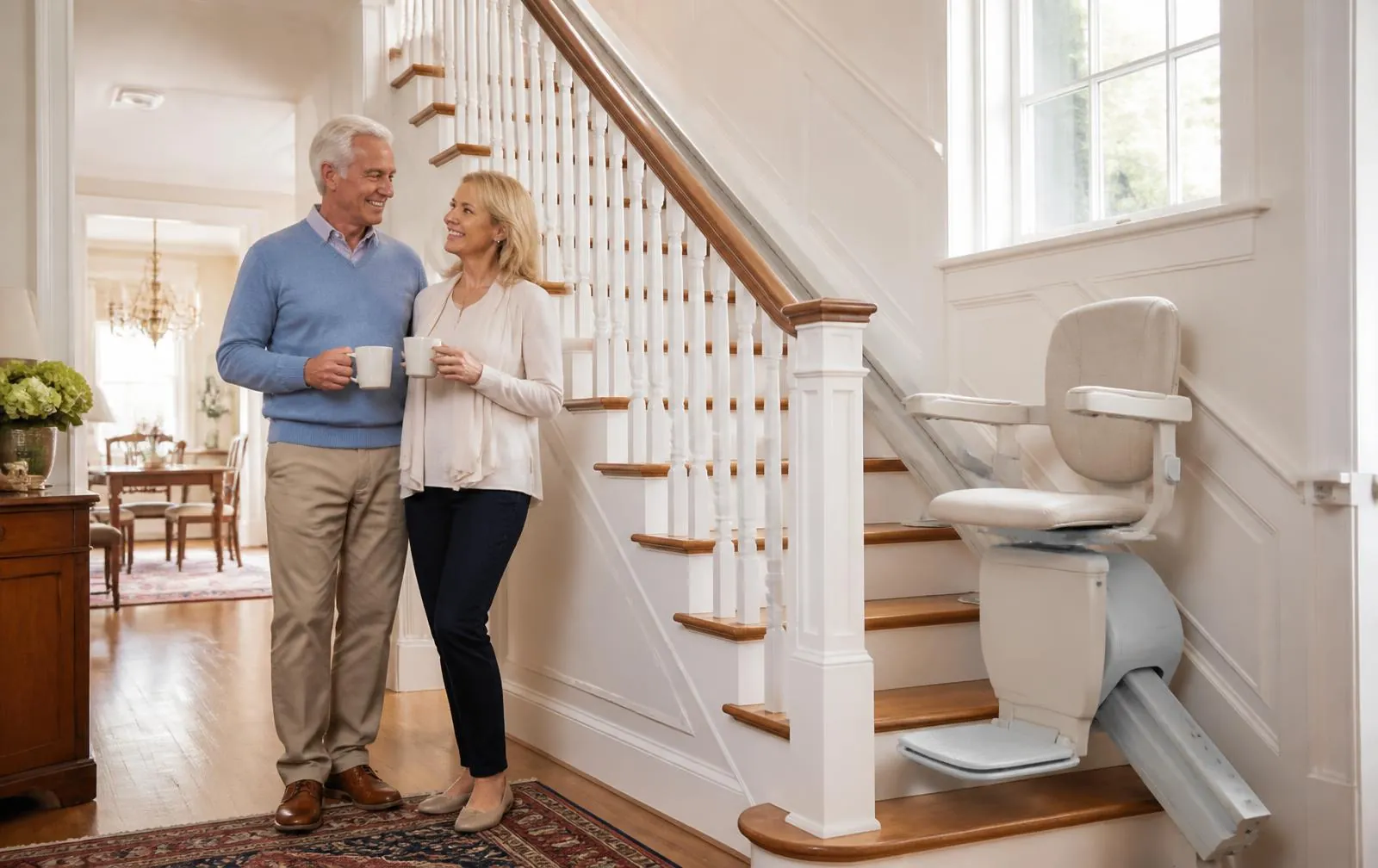
Why do families in Newton choose JC Mobility Equipment?
JC Mobility Equipment helps people maintain safe, independent access at home, at work, and in public spaces. Our services include stairlifts, vertical platform lifts, modular wheelchair ramps, barrier-free bathroom modifications, and commercial accessibility solutions designed around each property and user's needs.
With more than 20 years of industry experience, we assess stairways, entrances, bathrooms, doorways, and other access points before recommending equipment. Our team provides custom-fit solutions rather than relying on one standard design.
Our factory-trained technicians install equipment according to manufacturer specifications and applicable safety requirements. We also support projects involving ADA accessibility, aging-in-place planning, residential remodeling, and commercial access improvements.
- 20+ years of proven experience installing stairlifts, ramps, platform lifts, and other mobility solutions
- Certified and factory-trained technicians, so warranties stay valid and installations meet engineering specifications
- Same-week or emergency installation options after surgery, injury, or hospital discharge
- Custom-fit solutions from in-home assessments, not one-size-fits-all products
- Full-service sales, installation, and repair from a single point of contact
- Transparent, upfront pricing with no hidden fees or surprise charges after installation
- Insurance and Medicare/Medicaid documentation support, including prior authorizations and claims
- Local, community-rooted reputation built on decades of referrals from neighbors, doctors, and physical therapists
- Preventive maintenance and safety inspections, not just reactive repairs
| Service feature | What we provide |
|---|---|
| Complete support | Sales, installation, maintenance, and repairs |
| Flexible scheduling | Same-week and emergency installation options when available |
| Clear pricing | Upfront estimates without undisclosed installation fees |
| Ongoing safety | Preventive maintenance and equipment inspections |
| Documentation help | Support with insurance, Medicare, and Medicaid paperwork |
| Emergency service | 24/7 repair-line availability for urgent equipment issues |
What does the installation process include?
JC Mobility Equipment installs and services mobility equipment for homes, businesses, and healthcare settings. Our team provides custom measurements, manufacturer-trained installation, transparent pricing, safety testing, user instruction, documentation support, and ongoing maintenance.
We can also help families coordinate prior authorizations, claims, and required documentation. Our local service approach keeps one team involved throughout the equipment's life cycle, from the initial assessment through future repairs and upgrades.
In-home assessment
We assess the user's mobility needs, home layout, access points, and equipment requirements before installation. An in-home assessment examines stair width and shape, landing space, doorway clearances, thresholds, bathroom layout, and available electrical service. We may coordinate with a physical or occupational therapist when the user needs help selecting a device or transferring safely.
Installation and safety testing
Our certified, factory-trained technicians install, test, and explain each system. We test travel limits, braking, swivel-seat locks, obstruction sensors, seat belts, remote controls, and charging performance, then demonstrate safe transfers and emergency lowering procedures.
Training and documentation
Our technicians document the work, explain maintenance needs, and can provide scheduled inspections and repair support. Documentation supports maintenance records, warranty service, commercial compliance reviews, and future repairs.
How does financing, insurance, and pricing work?
JC Mobility Equipment gives customers an itemized, upfront estimate covering the lift, rail, electrical work, delivery, installation, and training. A straight stairlift commonly costs $2,000–$8,500 installed, while curved models may reach $20,000 because they require a custom rail. Outdoor units, platform lifts, ramps, longer rails, extra landings, and complex mounting can increase the price.
We help assemble Medicare or Medicaid documentation, prior-authorization materials, and insurance claim records. Coverage varies, so families should confirm eligibility with their plan and ask about grants, veterans' programs, nonprofit assistance, financing, and refurbished equipment.
An inclined platform lift generally costs $10,000 to $30,000 or more, including equipment and installation. The final price depends on rail length, staircase configuration, platform size, indoor or outdoor use, electrical work, structural modifications, and permit requirements. These are typical installed price ranges, not a quote. Your price is confirmed after the in-home assessment.
Which safety features come with professionally installed equipment?
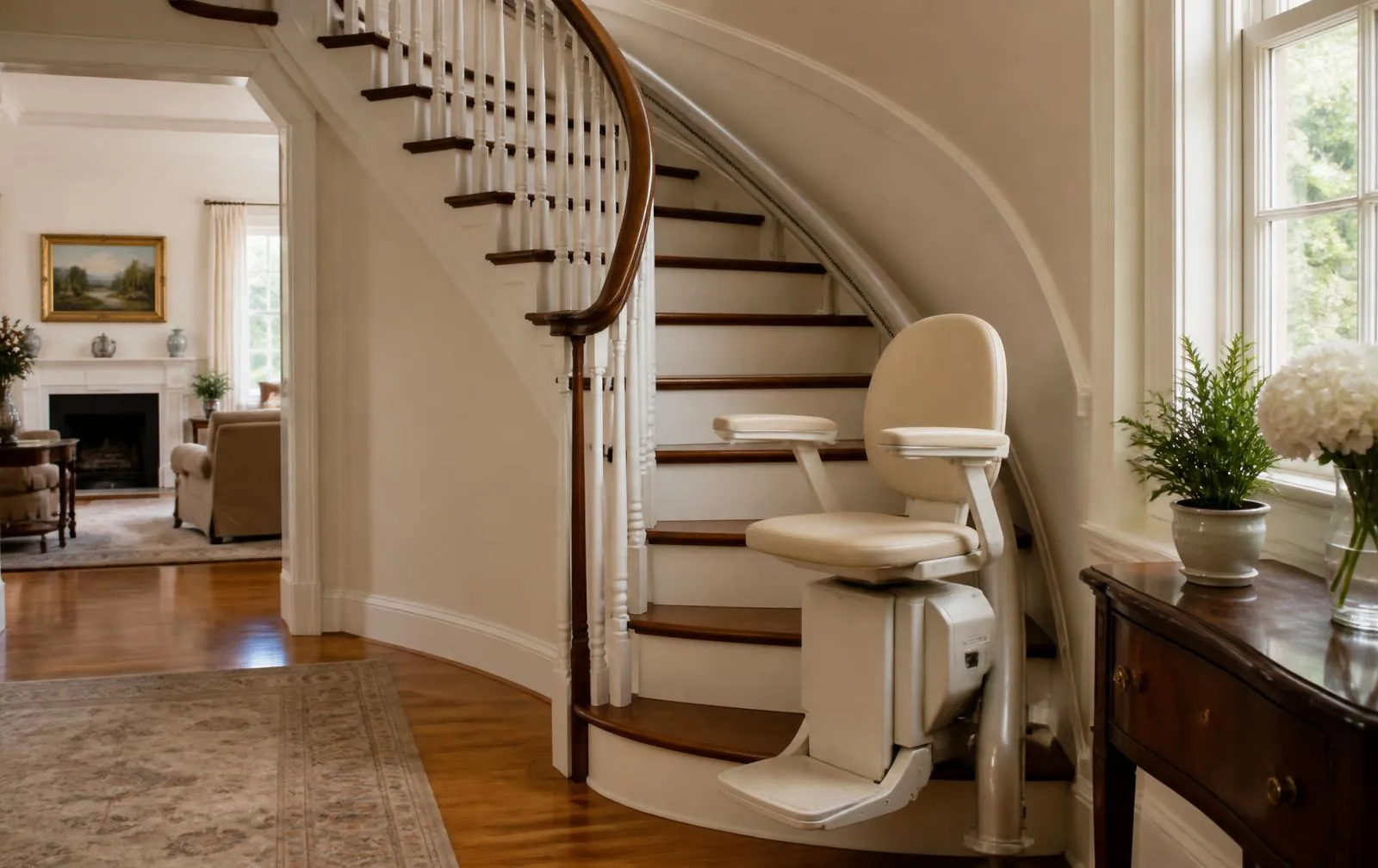
A professionally installed stairlift should include a swivel seat, retractable or fixed seat belt, obstruction sensors, emergency stop control, and battery backup. Folding arms, footrests, and rails help users transfer safely and keep stairways clear. Outdoor models need weather-resistant controls, corrosion-resistant materials, and suitable charging protection.
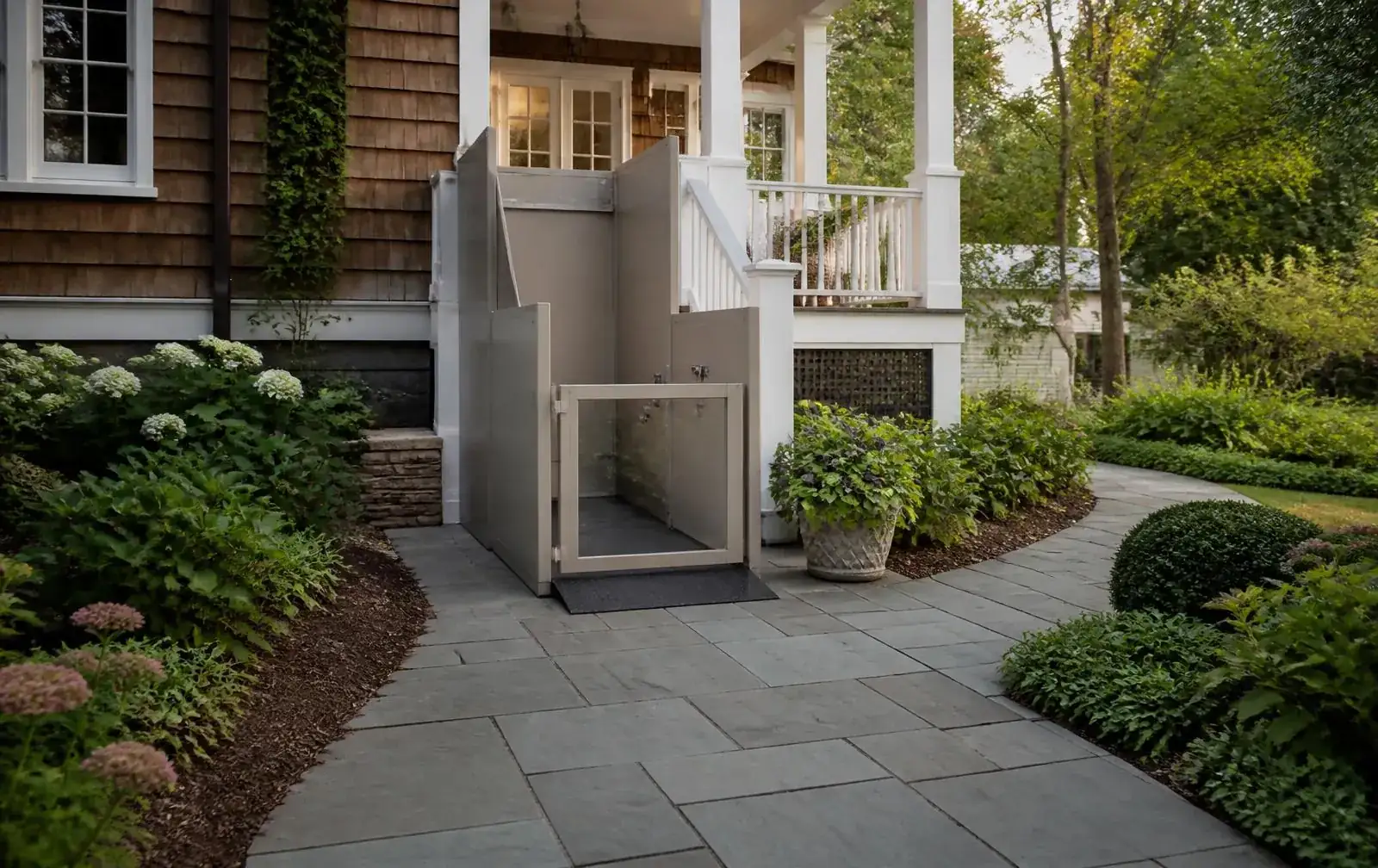
Vertical platform lifts generally use gates, interlocks, platform sensors, and emergency lowering controls. We show every user and caregiver where the emergency stop is located and how to reset the equipment safely. Users should not attempt to bypass sensors, force a gate, or continue operating a lift after an unexplained stop.
We recommend a safety inspection at least annually, with more frequent checks for heavily used or outdoor equipment. Technicians inspect batteries, belts, drive components, rail fasteners, sensors, charging contacts, and emergency controls, and we operate a 24/7 emergency repair line for customers who depend on their equipment every day.
Newton villages we serve
JC Mobility Equipment serves Newton and the surrounding Greater Boston communities.
Our service area
JC Mobility Equipment is based in Newton, MA and installs mobility equipment across Newton and Greater Boston.
Frequently asked questions
What types of stairlifts are available for straight, curved, and outdoor staircases?
Straight stairlifts travel along one continuous rail and typically suit standard staircases without landings or changes in direction. They usually install faster and cost less than custom systems.
Curved stairlifts use a rail designed for multiple levels, turns, intermediate landings, or unusual stair geometry. We measure the staircase and manufacture or configure the rail to follow its path.
Outdoor stairlifts use weather-resistant components, protective covers, and corrosion-resistant finishes. We evaluate drainage, exposure, electrical access, and temperature conditions before recommending an outdoor model.
Most stairlifts include a powered seat, footrest, armrests, seat belt, controls, safety sensors, and battery backup. We provide in-home assessments and can arrange same-week or emergency installation when a sudden injury, surgery, or hospital discharge changes mobility needs.
How much does an inclined platform lift cost for a home or commercial building?
An inclined platform lift generally costs $10,000 to $30,000 or more, including equipment and installation. The final price depends on rail length, staircase configuration, platform size, indoor or outdoor use, electrical work, structural modifications, and permit requirements. These are typical installed price ranges, not a quote. Your price is confirmed after the in-home assessment.
Commercial installations may cost more because they can require engineered drawings, fire-safety coordination, accessibility reviews, durable finishes, and integration with public circulation areas. We provide written, upfront pricing after assessing the site rather than relying on a generic estimate.
An inclined platform lift carries a wheelchair or mobility device along the stairs. It can help where a seated stairlift does not meet the user's needs, but the platform requires sufficient stair width and clear landing space.
When is a vertical platform lift the best accessibility solution for a residential property?
A vertical platform lift often suits homes with a short elevation change, porch or deck access, split-level entry, or limited space for a ramp. It moves a wheelchair or mobility device vertically between levels without following the stairs.
Residential models may serve rises of a few feet, while larger systems can connect multiple levels when the structure, enclosure, and local requirements allow. We evaluate landing dimensions, door locations, drainage, electrical service, weather exposure, and whether the lift will be installed indoors or outdoors.
A vertical platform lift may preserve more yard space than a long ramp. It still requires a stable base, safe entry and exit areas, and compliance with applicable building, electrical, and accessibility regulations.
What ADA requirements apply to commercial wheelchair ramps, lifts, and accessible entrances?
The ADA Standards generally require an accessible route where a facility must provide access for people with disabilities. Ramp slope normally cannot exceed 1:12, meaning one inch of rise for every 12 inches of horizontal run, although local codes may impose stricter requirements.
Accessible ramps commonly need level landings at the top, bottom, and direction changes. Handrails, edge protection, clear width, cross-slope, surface stability, and maximum rise between landings also matter.
Commercial entrances may require accessible door clearances, threshold limits, maneuvering space, hardware, signage, and an accessible route from parking or public sidewalks. Platform lifts can address changes in level when a ramp is impractical, but we review the project under the ADA, applicable state or local building codes, and authority requirements.
How can modular wheelchair ramps improve access for homes, businesses, and temporary installations?
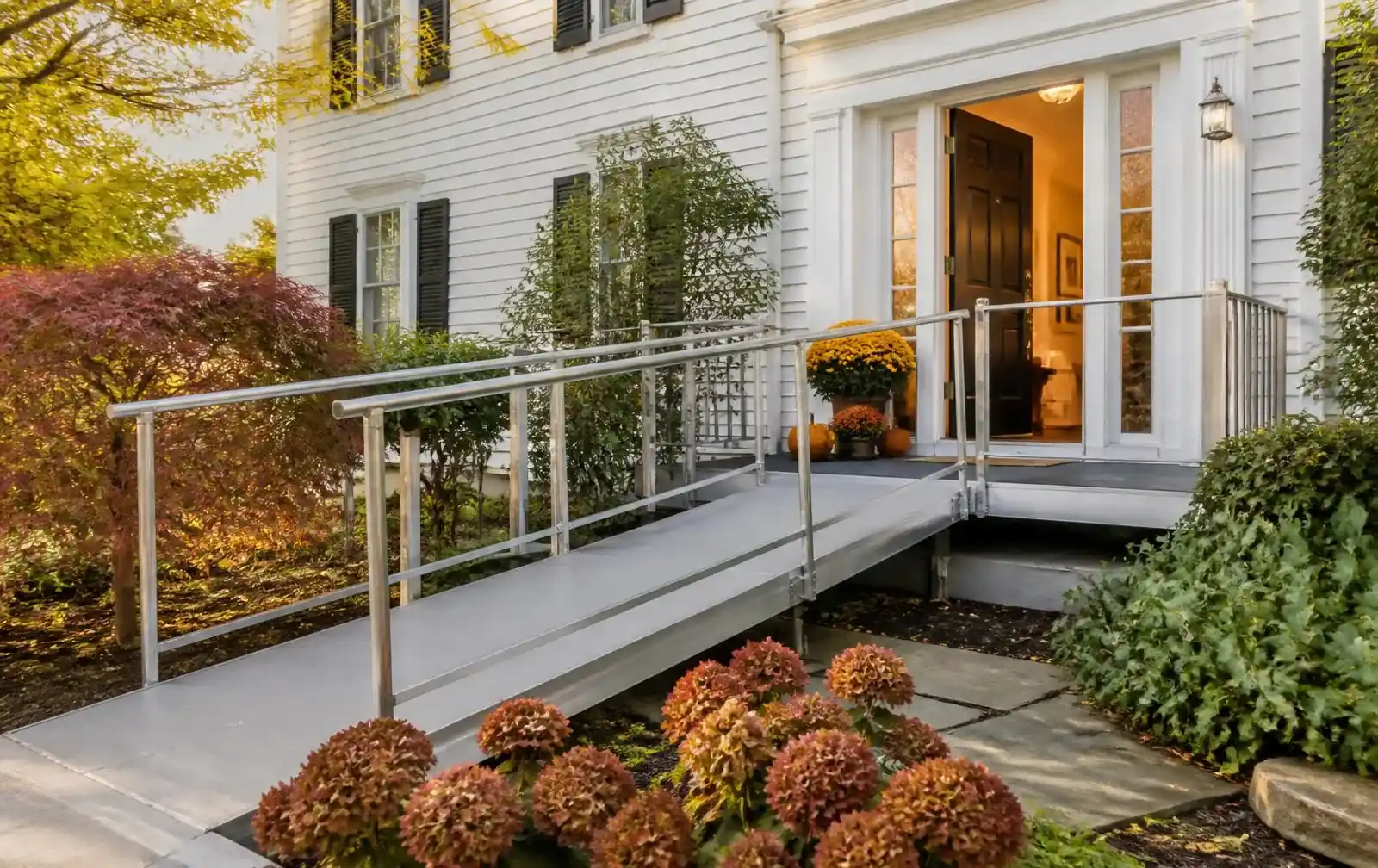
Modular wheelchair ramps use prefabricated sections that we assemble into a route suited to the site. They can include ramps, platforms, turns, handrails, guardrails, and threshold transitions.
These systems often work well for porches, entrances, storefronts, offices, churches, and temporary access needs after an injury or during construction. We can reconfigure or relocate many modular systems when a property's access requirements change.
We assess the required rise, available run, landing space, surface conditions, drainage, and user's mobility device. The installation must maintain safe slope, width, transitions, and handrails under the applicable residential or commercial standards.
Which barrier-free bathroom modifications support safe aging in place?
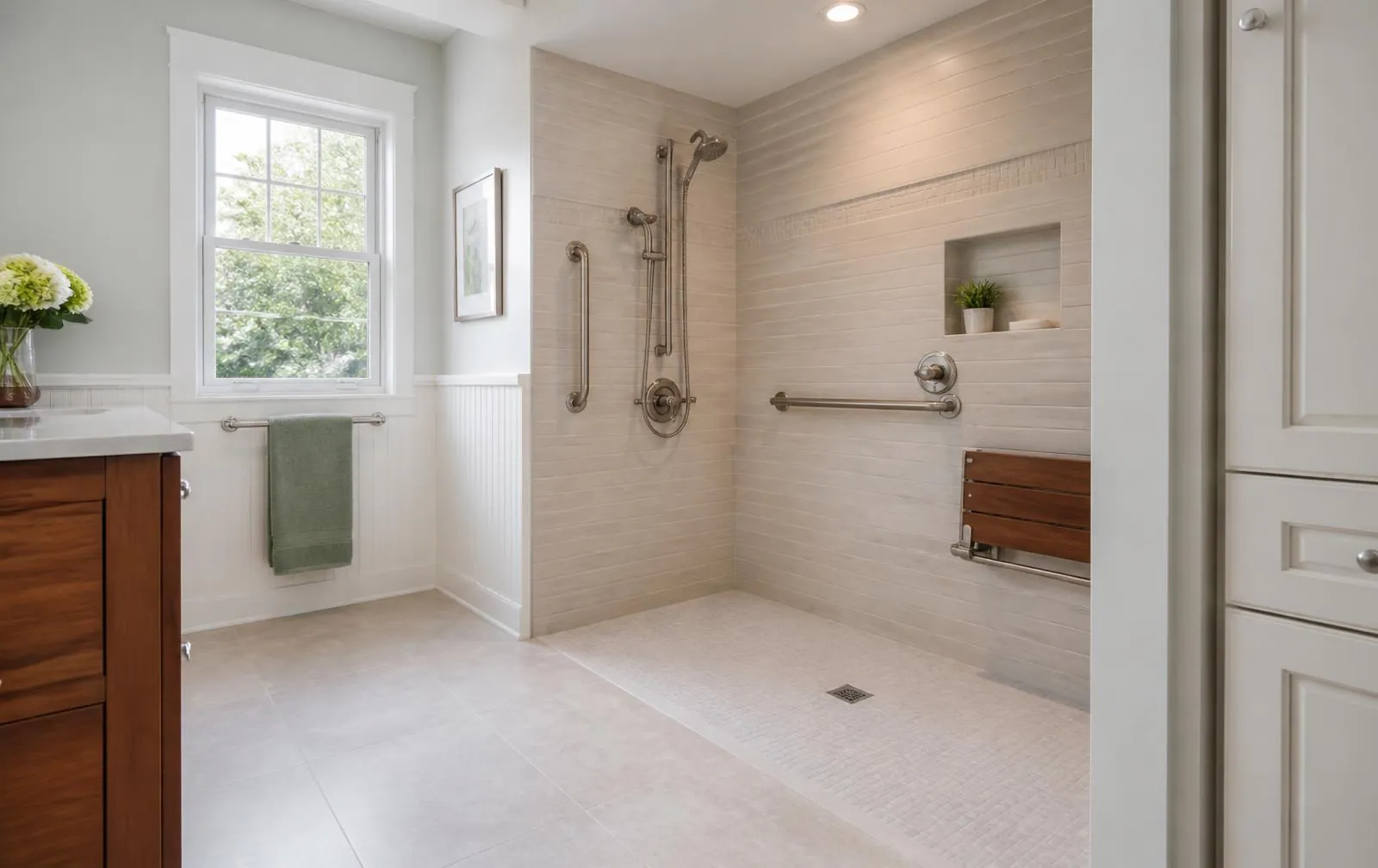
Common modifications include curbless or low-threshold showers, handheld shower sprays, built-in or fold-down seats, grab bars, comfort-height toilets, nonslip flooring, lever-style faucets, improved lighting, and widened doorways. We position each feature according to the user's reach, transfer method, and mobility device.
A roll-in shower may support wheelchair access, while a transfer shower can work when the user moves from a wheelchair or walker onto a shower seat. Reinforced walls allow secure grab-bar installation, and pressure-balancing or thermostatic controls can help reduce scald risks.
We also review bathroom clearances, door swing, toilet-side transfer space, sink knee clearance, ventilation, and water management. Our in-home assessment helps coordinate modifications with stairlifts, ramps, platform lifts, and other aging-in-place installations.
Ready for a safer, more accessible home?
JC Mobility Equipment provides in-home assessments, upfront pricing, and factory-trained installation across Newton and Greater Boston.Call Us