
Nonantum, MA · Mobility Equipment
Stairlift & Ramp Installation in Nonantum, MA
JC Mobility Equipment provides custom equipment recommendations, professional installation, and ongoing service to help you use your mobility solution safely and confidently. Our technicians assess your home, explain equipment options, review transparent pricing, and support maintenance or insurance documentation when needed.
- 20+ years of proven experience
- Certified, factory-trained technicians
- ADA-compliant assessments
Newton, MA More than mobility. It's peace of mind.
20+ years of experience
Two decades of hands-on installation experience
100% customer satisfaction
Thousands of installations completed
Factory-trained technicians
Manufacturer-compliant installation
24/7 repair line
For qualifying mobility equipment
What does an accessibility needs assessment include?
Our accessibility assessment combines the resident's mobility needs with the physical conditions of the home.
We evaluate stairs, entrances, bathrooms, bedrooms, transfer areas, and exterior routes while considering wheelchair or scooter use, balance, strength, caregiver assistance, and future needs.
From there, we can compare stairlifts, wheelchair ramps, platform lifts, home elevators, ceiling lifts, bathroom safety equipment, and other appropriate accessibility solutions.
What should Nonantum homeowners consider when planning accessibility improvements?
Available space is often one of the most important factors in selecting mobility equipment.
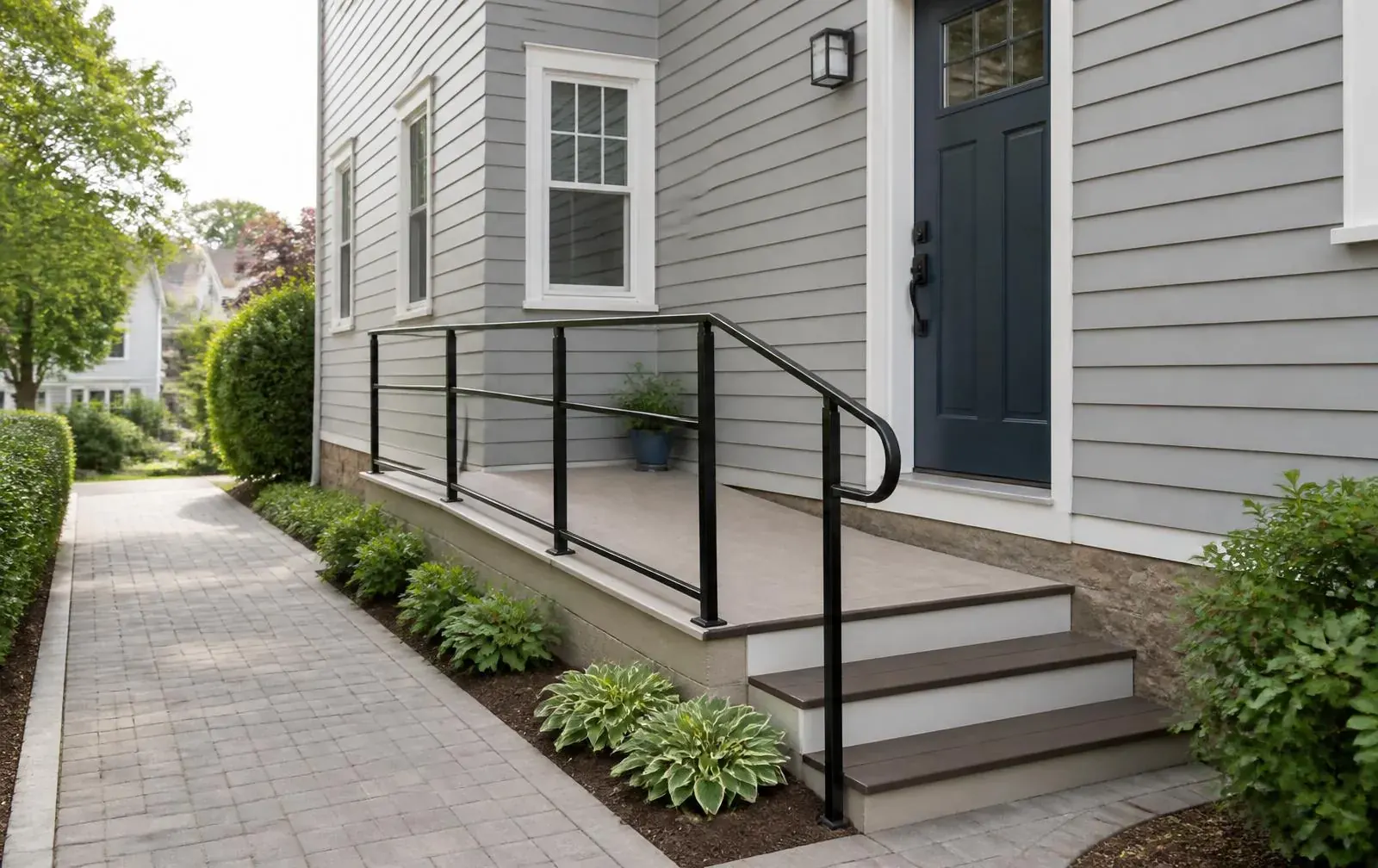
A homeowner considering wheelchair ramp installation, for example, needs enough exterior space to accommodate the required rise, run, and landings. When that space is unavailable, a vertical platform or wheelchair lift may provide another option.
For interior stairs, we evaluate whether a straight or curved stairlift can provide safe boarding and exit areas without unnecessarily restricting the staircase.
The goal is to identify the solution that works within the property rather than forcing equipment into a space that is not appropriate for it.
How is mobility equipment selected?
Equipment is matched to the user's transfer ability, mobility device, weight, balance, frequency of use, and caregiver support.
A stairlift installation may suit someone who can transfer safely to a seat. Wheelchair and scooter users may require a ramp or platform lift, while a home elevator can provide access between multiple levels.
Bathroom accessibility may involve grab bar installation, shower seating, or transfer equipment depending on the user's needs.
We compare practical installation requirements, space, equipment capacity, maintenance, and budget before recommending a solution.
What property conditions affect accessibility equipment installation in Nonantum?
Stair dimensions, narrow entrances, exterior grades, walkways, drainage, structural support, and electrical access can all influence installation.
Our technicians measure these conditions during the assessment and determine whether site preparation or additional trade work is necessary.
Exterior equipment must also be planned around year-round weather exposure, drainage, snow removal, and safe access between the equipment and the home's entrance.
How do you test and support equipment after installation?
After installation, we test normal operation and applicable safety systems before training the homeowner and caregivers.
Training covers the controls, transfers, charging, securement, emergency functions, and basic equipment inspections relevant to the installed system.
We also provide recommended maintenance information and ongoing service support when professional inspection or repair is needed.
Our service area
JC Mobility Equipment is based in Newton, MA and installs mobility equipment across Newton and Greater Boston.
Nearby Newton villages we serve
JC Mobility Equipment serves Newton and the surrounding Greater Boston communities.
Frequently asked questions
What types of wheelchair ramps are available for residential homes?
We install portable, modular, and permanent wheelchair ramps. Portable ramps suit temporary needs, such as recovery after surgery, while modular systems provide adjustable access for many residential entrances.
Permanent ramps typically use aluminum, wood, or concrete and attach to the home or a built landing. We recommend materials and layouts after assessing the doorway, grade, drainage, and expected use.
How do I choose between a portable, modular, and permanent wheelchair ramp?
We match the ramp to the length of need, entrance height, available property space, and equipment weight. A portable ramp can work for short-term access, but it may not provide enough length or stability for daily use.
A modular ramp offers more flexibility and can often be reconfigured or relocated. A permanent ramp makes sense when the household needs consistent, long-term access and the property can support the required footprint.
Do I need a permit to install a wheelchair ramp at my home?
Permit requirements depend on the ramp design, attachment to the structure, property conditions, and local building rules. Nonantum falls within Newton, so we recommend confirming requirements with the City of Newton before construction begins.
We can help identify the information needed for the application and coordinate installation to meet applicable specifications. Homeowners' association rules, historic-property requirements, and setback limitations may also apply.
How long does professional mobility equipment installation usually take?
Many straightforward ramp installations take one day, while larger modular systems, permanent structures, stairlifts, or platform lifts may require additional time. Weather, site preparation, permits, electrical work, and custom fabrication can affect the schedule.
We provide a site-specific timeline after an in-home assessment. When equipment availability and site conditions allow, we may offer same-week or urgent installation for post-surgery, injury, or hospital-discharge needs.
Can a ramp be installed at a front door with limited space?
Yes. We can evaluate switchback layouts, threshold ramps, angled approaches, modular landings, and other space-conscious configurations. The design must still provide a safe slope, adequate width, stable landings, and clear door access.
If the front entrance cannot accommodate a compliant ramp, we can assess a side or rear entrance, vertical platform lift, or another mobility solution. Our technicians measure the doorway, stairs, grade, and turning areas before recommending equipment.
What safety features should a residential wheelchair ramp include?
A residential ramp should include a stable, slip-resistant surface; secure handrails where needed; edge protection; level landings; and adequate clearance at doors. The ramp should also drain properly and avoid abrupt transitions that could catch wheels or walking aids.
We check fasteners, supports, guardrails, thresholds, and landing stability during installation. Scheduled maintenance and safety inspections can identify loose hardware, surface wear, corrosion, or drainage problems before they affect daily access.
Ready for a safer, more accessible home?
JC Mobility Equipment provides in-home assessments, upfront pricing, and factory-trained installation across Newton and Greater Boston.Call Us