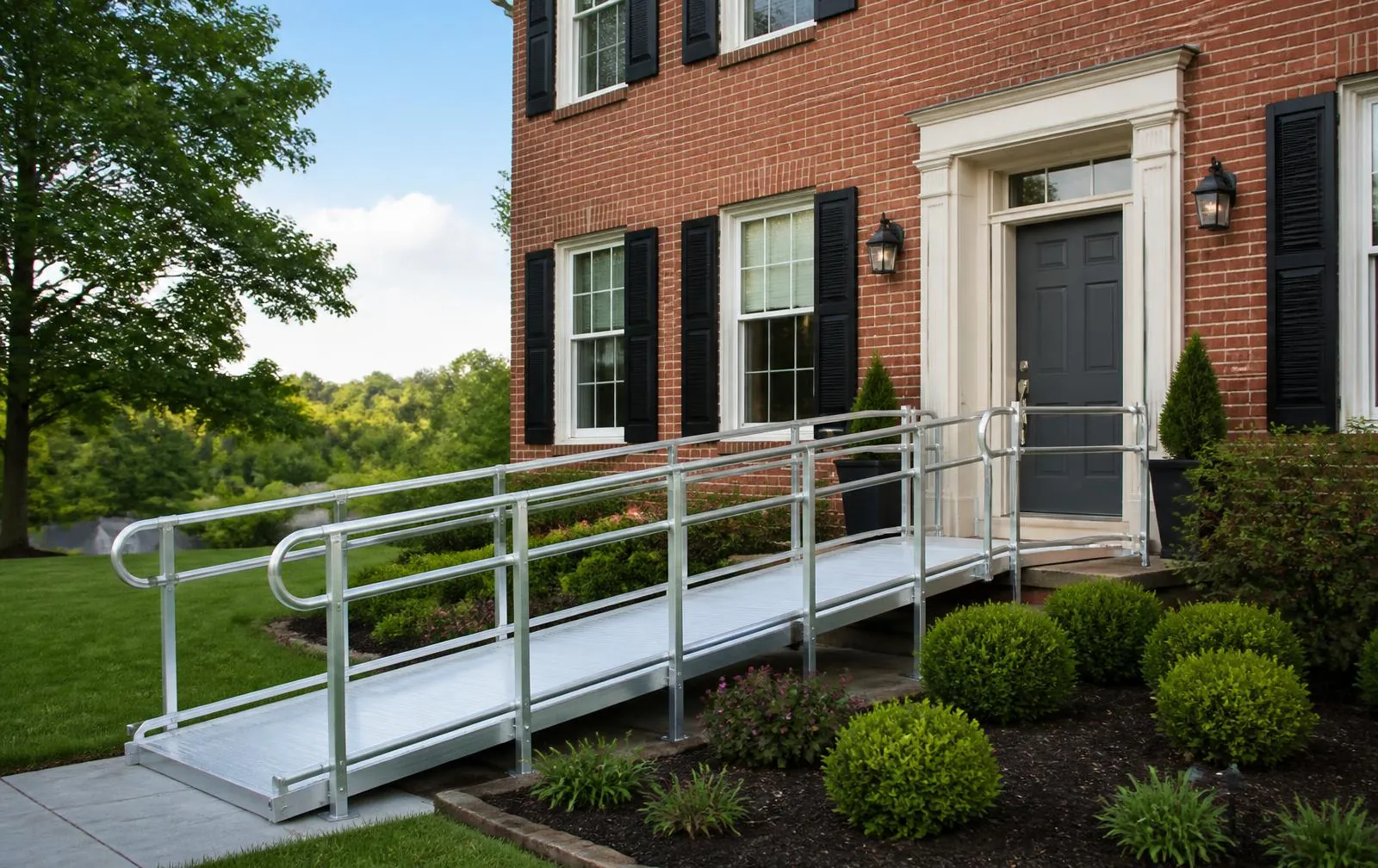
Modular aluminum wheelchair ramp with handrails at the front entrance of a brick colonial home

Newton, MA · Wheelchair Ramps

Wheelchair Ramp Installation in Newton, MA

JC Mobility Equipment installs modular aluminum, wood, and permanent wheelchair ramps in Newton, MA, matching the design to your wheelchair, scooter, walker, or other mobility equipment. Our certified, factory-trained technicians assess the site and provide ongoing inspections and repair support after installation.

  • 20+ years of proven experience
  • Certified, factory-trained technicians
  • ADA-compliant assessments

Newton, MA More than mobility. It's peace of mind.

Request a free in-home assessment

Tell us the access challenge you need to solve. Upfront pricing, no undisclosed installation fees.

Serving Newton and Greater Boston.

20+ years of experience

Two decades of hands-on installation experience

100% customer satisfaction

Thousands of installations completed

Factory-trained technicians

Manufacturer-compliant installation

24/7 repair line

For qualifying mobility equipment

What types of wheelchair ramps does JC Mobility Equipment install?

JC Mobility Equipment installs residential and commercial wheelchair ramps in Newton, MA, including modular aluminum ramps, permanent wood ramps, threshold ramps, and portable ramp solutions where appropriate.

Our wheelchair ramp installers evaluate the entrance, total rise, available space, landings, door clearance, drainage, surface conditions, and the mobility equipment that will use the ramp. A power wheelchair or scooter may require different turning and landing space than a manual wheelchair or walker.

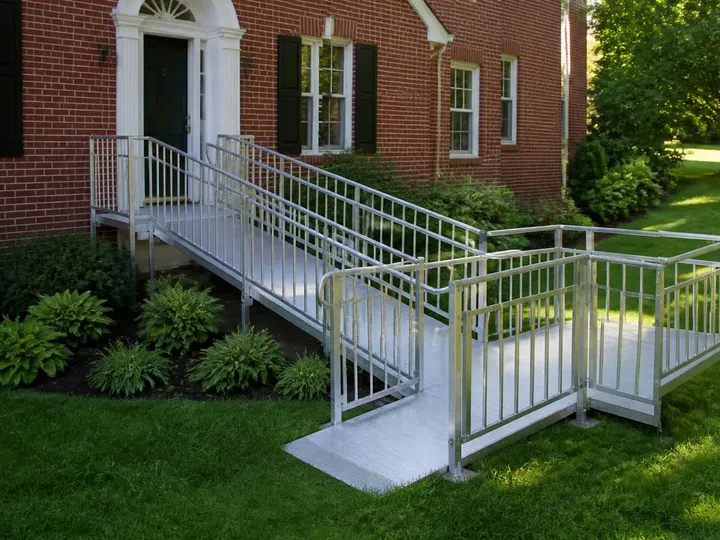
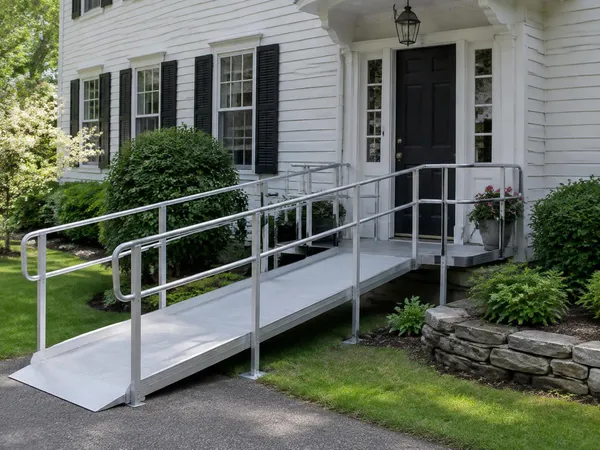
Modular aluminum wheelchair ramp with handrails leading to a level landing at a front door

Modular aluminum wheelchair ramps

Modular aluminum wheelchair ramps use prefabricated ramp sections, platforms, handrails, and supports that can be configured around the property.

These systems are often a practical option for residential entrances because installation can be faster than building a permanent structure, and many modular ramps can later be reconfigured or relocated if accessibility needs change.

We calculate the required rise and run, determine whether straight or switchback sections are appropriate, and account for landings, doorways, drainage, and safe transitions.
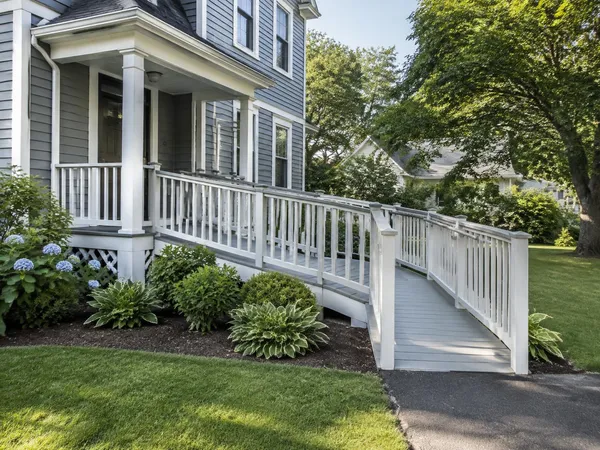
Painted wood wheelchair ramp with white railings connected to a covered front porch

Permanent wood wheelchair ramps

Wood wheelchair ramps provide greater design flexibility for properties that require longer runs, integrated stairs, substantial platforms, or layouts that do not fit a standard modular configuration.

Permanent ramp installation requires careful planning for framing, ground conditions, drainage, handrails, landings, surface traction, and local permitting requirements.

We assess the complete accessible route before recommending a permanent ramp rather than choosing the material based on appearance alone.

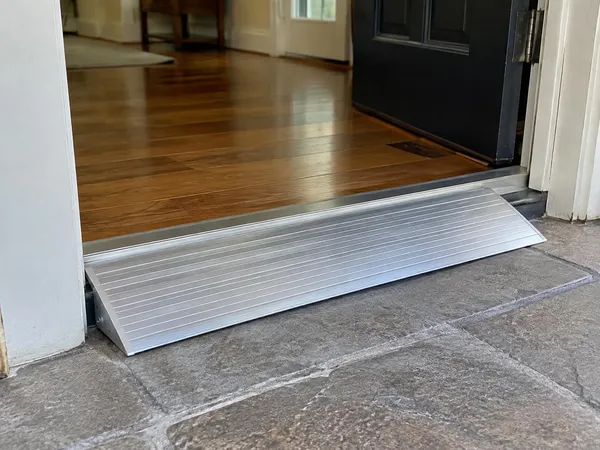
Aluminum threshold ramp bridging the raised sill of an exterior doorway

Threshold and portable ramps

For smaller elevation changes, a threshold or portable wheelchair ramp may provide sufficient access without a full ramp system.

We measure the threshold height and approach area and verify that the selected ramp can safely accommodate the user's wheelchair, scooter, walker, or other mobility device.

Modular aluminum wheelchair ramp with a switchback landing and handrails at a brick house entrance
Modular aluminum sections let us build slope, landings, and handrails around the site.

How do wheelchair ramp installers determine the correct size and layout?

Professional wheelchair ramp installation begins by measuring the total vertical rise from the lower surface to the finished entrance or landing.

We then calculate the required ramp run and determine whether the property can accommodate a straight layout or requires platforms, turns, or switchbacks.

The assessment also considers door swings, walkways, stairs, railings, property boundaries, drainage, utilities, surface stability, and the turning space required by the user's mobility equipment.

When the required ramp would be too long for the available space, we may recommend evaluating a vertical platform lift as an alternative accessibility solution.

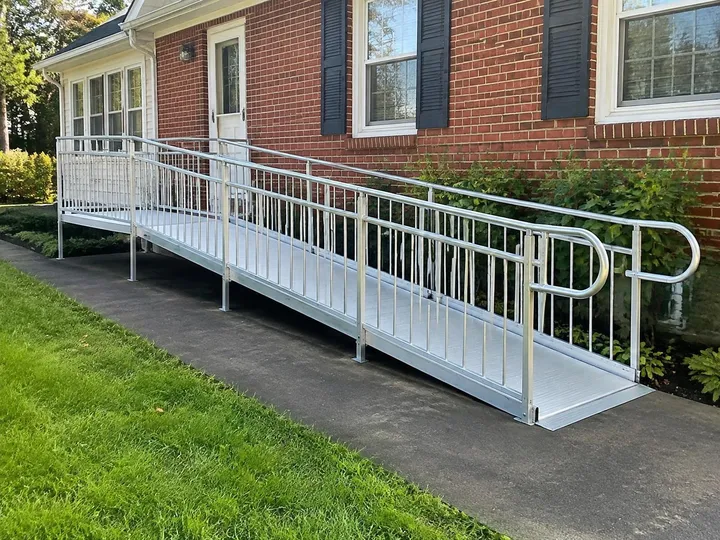
Long, gently sloped aluminum wheelchair ramp with handrails on both sides beside a brick house

What ADA slope, width, and landing requirements apply to wheelchair ramps?

For projects subject to the 2010 ADA Standards, an accessible ramp generally has a maximum running slope of 1:12, or at least 12 inches of ramp run for every inch of vertical rise. Clear width, landings, handrails, edge protection, cross-slope, and surface stability may also be regulated.

Requirements differ between private residences, rental properties, commercial buildings, healthcare facilities, and public spaces. State and local building requirements may also apply.

JC Mobility Equipment evaluates the applicable requirements during the site assessment and identifies when permits, drawings, inspections, or other approvals may be needed before wheelchair ramp installation begins.

How much does wheelchair ramp installation cost?

Wheelchair ramp cost depends on the total rise, required ramp length, material, number of landings or switchbacks, handrails, site preparation, foundation work, permits, and installation conditions.

A short threshold or portable ramp typically costs less than a full modular aluminum wheelchair ramp or permanent wood structure. Properties with greater elevation changes require longer runs and may therefore have substantially higher material and installation costs.

JC Mobility Equipment provides site-specific, upfront pricing after measuring the property so customers can compare the appropriate ramp configuration and total installation requirements before moving forward.

If insurance, Medicaid, or another funding program may apply, we can help organize measurements, invoices, prior-authorization materials, and supporting documentation.

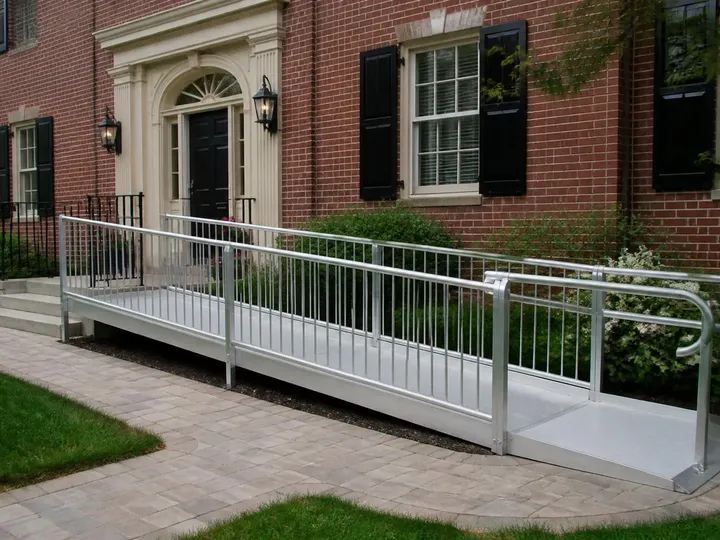
Finished modular aluminum wheelchair ramp at the entrance of a brick house
Level landings and clean transitions support a safer route through the doorway.

How do I maintain a wheelchair ramp after installation?

Wheelchair ramps should be inspected periodically for loose fasteners, unstable supports, damaged handrails, worn surfaces, corrosion, drainage problems, or transitions that could catch a wheelchair caster or walker.

Newton's seasonal weather also makes snow, ice, leaves, and standing water important considerations. Aluminum and wood surfaces should be kept clear using methods and de-icing products appropriate for the ramp material.

JC Mobility Equipment provides preventive inspections and repair support to help maintain the ramp and accessible route after installation.

Where we offer wheelchair ramp installation near Newton

JC Mobility Equipment serves Newton and the surrounding Greater Boston communities.

Frequently asked questions

How can modular wheelchair ramps improve access for homes, businesses, and temporary installations?

Modular wheelchair ramps use prefabricated sections that JC Mobility Equipment assembles into a route suited to the site. They can include ramps, platforms, turns, handrails, guardrails, and threshold transitions.

These systems often work well for porches, entrances, storefronts, offices, churches, and temporary access needs after an injury or during construction. We can reconfigure or relocate many modular systems when a property's access requirements change.

We assess the required rise, available run, landing space, surface conditions, drainage, and user's mobility device. The installation must maintain safe slope, width, transitions, and handrails under the applicable residential or commercial standards.

What ADA requirements apply to commercial wheelchair ramps, lifts, and accessible entrances?

The ADA Standards generally require an accessible route where a facility must provide access for people with disabilities. Ramp slope normally cannot exceed 1:12, meaning one inch of rise for every 12 inches of horizontal run, although local codes may impose stricter requirements.

Accessible ramps commonly need level landings at the top, bottom, and direction changes. Handrails, edge protection, clear width, cross-slope, surface stability, and maximum rise between landings also matter.

Commercial entrances may require accessible door clearances, threshold limits, maneuvering space, hardware, signage, and an accessible route from parking or public sidewalks. Platform lifts can address changes in level when a ramp is impractical, but JC Mobility Equipment reviews the project under the ADA, applicable state or local building codes, and authority requirements.

How much does a wheelchair ramp cost?

Common installed ranges are $150–$800 for a portable or folding ramp, $1,500–$5,000 for modular aluminum, $2,600–$8,000 for wood, and $3,000–$10,000 for custom wood or concrete. The final quote depends on the rise, required length, width, switchbacks, landings, handrails, surface treatment, demolition, foundation work, permits, and labor access. These are typical installed price ranges, not a quote. Your price is confirmed after the in-home assessment.

JC Mobility Equipment provides upfront pricing that separates equipment, installation, site preparation, permits, and optional services.

Do I need a permit for a wheelchair ramp?

Requirements can vary by jurisdiction and by whether the ramp serves a private home, rental property, healthcare facility, or business. JC Mobility Equipment helps identify whether the project needs a building permit, site approval, engineering review, or right-of-way authorization, and we provide documentation needed for permits, warranties, insurance claims, and maintenance records.

Can insurance or Medicaid help pay for a wheelchair ramp?

When insurance, Medicaid, or another funding source may apply, JC Mobility Equipment helps organize measurements, invoices, prior authorizations, and supporting documentation. Coverage and eligibility vary by location, diagnosis, equipment type, and program rules.

How do I keep a wheelchair ramp safe in winter?

Remove leaves, mud, and ice promptly, using a plastic shovel or broom on aluminum and wood surfaces and choosing de-icing products compatible with the ramp material. Avoid piling snow at the bottom, where melting and refreezing can block the travel path.

JC Mobility Equipment's preventive maintenance visits can identify settlement, drainage problems, worn surfaces, and hardware issues before they affect safe use.

Ready for a safer, more accessible home?

JC Mobility Equipment provides in-home assessments, upfront pricing, and factory-trained installation across Newton and Greater Boston.Call Us