
Newton Centre, MA · Mobility Equipment
Stairlift & Ramp Installation in Newton Centre, MA
JC Mobility Equipment helps you evaluate stairs, entrances, doorways, and daily routines in Newton Centre, MA before recommending a practical mobility solution. We provide custom assessments, professional installation, safety inspections, and ongoing repair support.
- 20+ years of proven experience
- Certified, factory-trained technicians
- ADA-compliant assessments
Newton, MA More than mobility. It's peace of mind.
20+ years of experience
Two decades of hands-on installation experience
100% customer satisfaction
Thousands of installations completed
Factory-trained technicians
Manufacturer-compliant installation
24/7 repair line
For qualifying mobility equipment
What does an accessibility needs assessment include?
A careful assessment connects the homeowner's mobility needs with the home itself. We review stairs, entrances, doorways, bathrooms, bedrooms, and other areas that may create accessibility challenges, while also discussing daily routines, caregiver needs, equipment compatibility, installation requirements, and future changes.
When appropriate, we evaluate solutions such as stairlift installation, wheelchair ramps, vertical platform lifts or wheelchair lifts, home elevators, ceiling lifts, and bathroom safety equipment. Measurements and site conditions help determine whether a particular solution will work safely without restricting doors, walkways, or emergency exits.
What should homeowners know about Newton Centre's older homes?
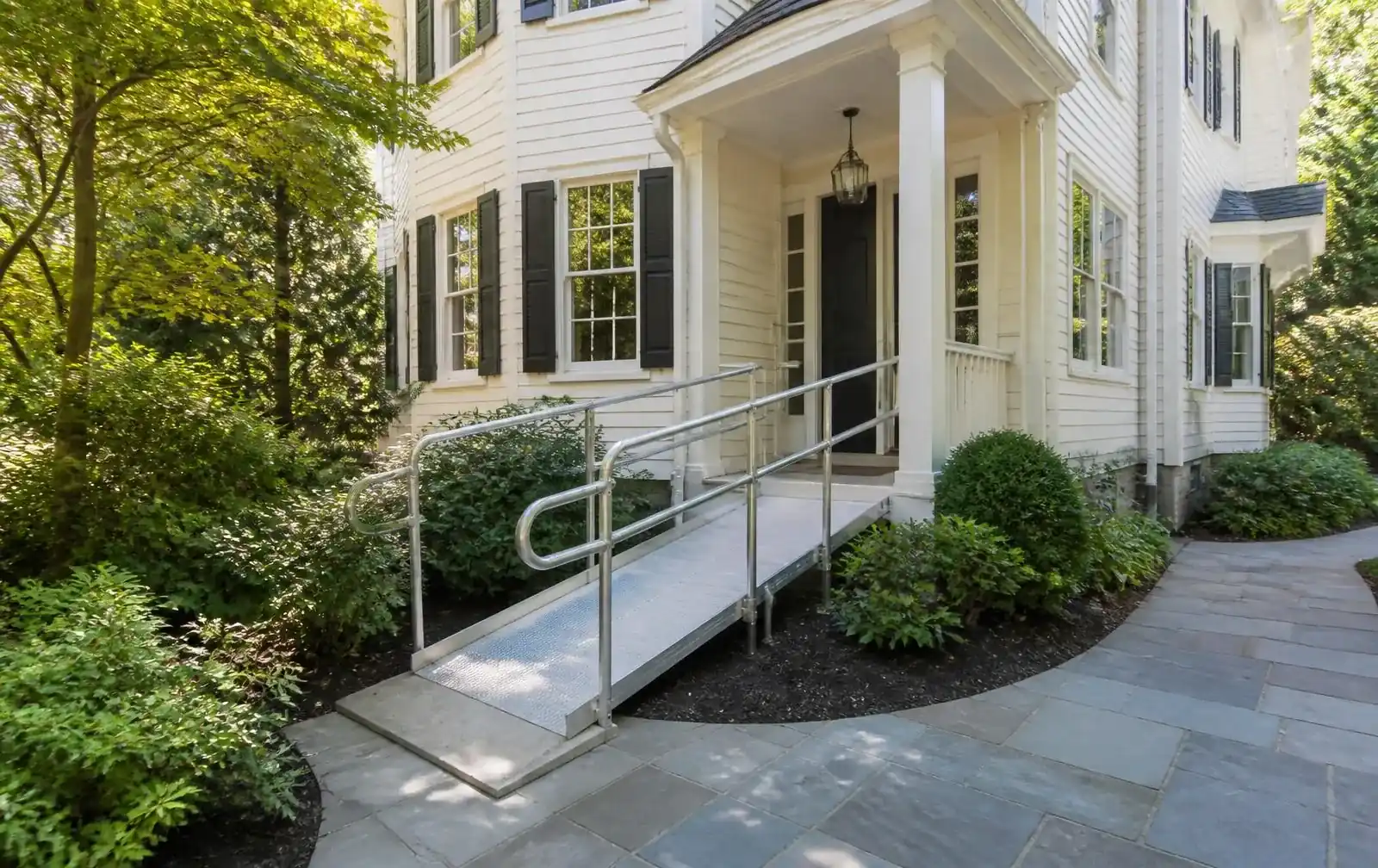
Newton Centre homes may include older layouts, narrow staircases, uneven entrances, and limited landing space. These characteristics can affect stairlift installation, wheelchair ramp installation, platform lifts, and other home accessibility modifications.
Our in-home assessment identifies the available space, structural conditions, electrical access, and potential installation requirements before equipment is selected. This allows us to recommend a solution that fits both the homeowner's mobility needs and the existing property.
How is the right mobility equipment selected?
We match mobility equipment to the user's mobility, balance, stair use, weight, transfer ability, and expected frequency of use. We also consider whether the person uses a manual wheelchair, power chair, scooter, walker, or oxygen equipment, since these factors affect space and platform requirements.
For example, a stairlift installation may work well for someone who can transfer safely to a seat, while a wheelchair ramp or vertical platform lift may be more appropriate for someone who needs to remain in a wheelchair or scooter. A home elevator may be considered when accessible travel is needed between multiple floors.
We compare straight and curved stairlifts, portable and permanent ramps, wheelchair lifts, accessible showers, grab bars, and other safety products according to the home and budget. Controls should remain easy to reach, while seats, belts, platforms, and surfaces must support safe transfers and daily use.
What local building considerations affect installation in Newton Centre?
Newton Centre homes can have narrow stairways, uneven entry paths, older electrical systems, and limited landing or driveway space. We measure stair width, door clearances, turning areas, slopes, mounting surfaces, and available power before selecting equipment.
These details help determine whether a stairlift, wheelchair ramp, platform lift, home elevator, or other accessibility equipment can be installed safely in the available space.
We also review handrails, steps, thresholds, drainage, lighting, and surface conditions. Ramp placement may require attention to property lines, walkways, and local permit requirements, while lifts may require suitable structural support and electrical connections.
Our factory-trained technicians follow manufacturer specifications and coordinate with licensed professionals when building or electrical work falls outside the installation scope.
How do you test equipment and train users after installation?
After installation, we inspect fasteners, tracks, belts, platforms, gates, controls, sensors, safety edges, and emergency features. We run the equipment through its full operating cycle and test it under normal conditions.
We then show users and caregivers how to operate the controls, secure mobility devices, use seat belts or gates, respond to alarms, and perform basic visual inspections.
Our service continues after installation through repairs, preventive maintenance, and safety inspections when applicable. We provide a recommended maintenance schedule and explain when equipment should be taken out of service until it can be inspected.
Our service area
JC Mobility Equipment is based in Newton, MA and installs mobility equipment across Newton and Greater Boston.
Nearby Newton villages we serve
JC Mobility Equipment serves Newton and the surrounding Greater Boston communities.
Frequently asked questions
What types of mobility equipment can be professionally installed in a home?
We install stair lifts, wheelchair ramps, vertical platform lifts, porch lifts, grab bars, transfer aids, and other accessibility equipment. Our certified, factory-trained technicians match the equipment to the home's structure, stair configuration, doorway width, and the user's needs.
Do you provide installation for stair lifts, wheelchair ramps, and grab bars?
Yes. We provide installation for stair lifts, wheelchair ramps, grab bars, and related mobility solutions. We also offer repairs, preventive maintenance, and safety inspections after installation.
How much does mobility equipment installation typically cost?
The cost depends on the equipment, installation complexity, materials, and required modifications. A straight stair lift generally costs less than a curved model, while ramp pricing depends on length, slope, surface, and whether a landing or permit is needed.
We provide upfront pricing before work begins and explain equipment, labor, and potential site-preparation costs. We can also help organize insurance or Medicare and Medicaid documentation when applicable, although coverage varies by plan and equipment type.
Can mobility equipment be installed in older homes with narrow stairways or doorways?
Often, yes. We measure narrow stairs, doorways, landings, and structural attachment points during the assessment, then recommend equipment that fits the available space.
Older homes may require custom mounting, doorway adjustments, electrical work, or other preparation. We identify those requirements before installation rather than relying on a standard, one-size-fits-all design.
Is a home assessment required before installing accessibility equipment?
We recommend an in-home assessment before installing most accessibility equipment. It allows us to evaluate measurements, floor surfaces, stair angles, electrical access, structural conditions, and safe transfer areas.
The assessment also helps us select equipment that supports the user's daily routine. For urgent needs after an injury, surgery, or hospital discharge, we may offer same-week or emergency installation options when scheduling and equipment availability allow.
Are permits required for wheelchair ramps or other accessibility modifications in Newton Centre?
Permit requirements depend on the type, size, location, and structural impact of the modification. Permanent ramps, platform lifts, electrical changes, and work affecting exterior structures may require review by the City of Newton or another applicable authority.
We identify potential permitting issues during the assessment and explain which approvals may apply. Property owners should confirm requirements with the City of Newton before construction begins, especially for work involving public access, setbacks, historic properties, or shared buildings.
Ready for a safer, more accessible home?
JC Mobility Equipment provides in-home assessments, upfront pricing, and factory-trained installation across Newton and Greater Boston.Call Us